
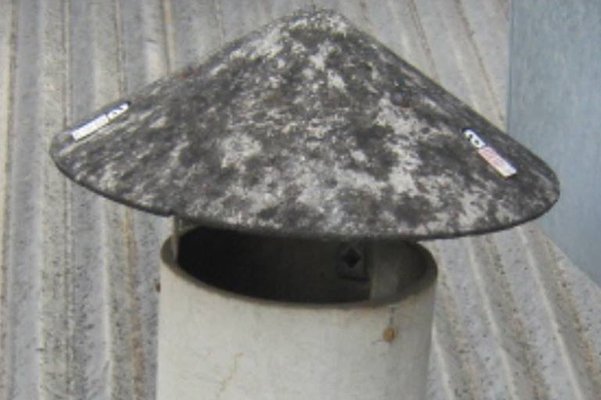
Signs your flue may contain asbestos
- The property was built or altered before 2000
- Grey, cement-like pipe running up through a wall, ceiling or roof
- A flue connected to an old boiler or solid-fuel appliance
- Cracks, chips or a crumbling surface
You cannot confirm asbestos by eye. A small sample analysed in a laboratory gives a certain answer.
Gas appliances and the flue
Disconnecting or replacing a flue on a gas appliance must be done by a Gas Safe registered engineer. We coordinate with your engineer so removal and the new installation fit together.
How we do the work
Inspect the flue
We look at where the flue runs, how it is fixed and how it passes through walls, ceilings and the roof.
Seal the area
Openings are sheeted, signs and barriers go up, and floors are protected.
Dismantle in sections
The flue is taken apart piece by piece using hand tools and wet methods. Pieces are wrapped as they come down.
Clean and decontaminate
HEPA vacuums and damp wipes clear the area, and all sheeting and equipment are bagged as hazardous waste.
Dispose with paperwork
A registered carrier transports the waste to an authorised site and you receive the consignment note.
Asbestos waste is double-bagged, sealed and taken by a registered carrier to an authorised disposal site. You receive a waste consignment note as your legal record.